Charlotte Deno l, Larisa Dryansky, Erik Verhagen, Isabelle Marchesin (eds)
Reference : 64422
, Brepols, 2023 Hardback, 247 pages, Size:178 x 254 mm, Illustrations:5 b/w, 66 col., Language(s):English, French. ISBN 9782503599731.
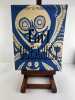
Summary This publication brings together essays by scholars of both medieval and contemporary art, offering a cross-disciplinary approach of both periods. It investigates how contemporary artists and contemporary art historians perceive medieval art, and, reciprocally, how medieval art historians envisage the echoes of medieval artforms and esthetics in contemporary art. The volume follows on from the symposium organized in conjunction with the exhibition "Make it New: Carte Blanche Jan Dibbets" that was held at the Biblioth que Nationale de France (Paris) in 2019, and which presented side by side Hrabanus Maurus's De Laudibus Sanctae Crucis (In Praise of the Holy Cross), a masterpiece of Carolingian art, with works by artists associated with conceptual art, mininimal art, and land art. How and why has medieval art, and particularly early medieval art, inspired contemporary artists since the 1950s? What has medieval art contributed to contemporary art? How has medieval art's treatment of figures, color, space, geometry, and rhythm provided inspiration for contemporary artists' experiments with form? In what way does contemporary artists' engagement with the topics of formatting, writing, semiosis, mimesis, and ornamentation draw inspiration from medieval models? To what extent and in what sense are the notions of authorship and performativity relevant for understanding conceptions of artmaking in both periods? Rather than focusing on medievalism and citational practices, or on the theory of images?both approaches having already produced an important body of comparative readings of medieval and contemporary art?the essays in this volume address the question of medieval art's contemporaneity thematically, through three trans-chronological topics: authorship, semiosis and mathematics, and performance. Engaging the artists' works as well as their writings, these studies conflate conceptual and esthetic perspectives. TABLE OF CONTENTS Pr face Charlotte Deno l, Larisa Dryansky, Isabelle Marchesin et Erik Verhagen Partie 1. Introduction Au-del des p riodisations : Parcours pass s et futurs potentiels Nancy Thebaut Partie 2. Auctoritas/authorship Qui tait Jean Fouquet pour Fran ois Robertet ? Une question d'auctorialit dans l'art de la fin du Moyen ge Elliot Adam L'artiste conceptuel son pupitre Val rie Mavridorakis Art conceptuel et scolastique : le Ch ne de Michael Craig-Martin est-il thomiste ? Benjamin Riado Partie 3. Signe et math matiques ?All form is a process of notation?: Hrabanus Maurus's ?exemplativist? art Aden Kumler' Les nombres de la forme et les formes du nombre. Essai sur les carolingiens et l'abstraction. Isabelle Marchesin Abstraction in Medieval Art: The Chiasm in Hagia Sophia Bissera Pentcheva Hollis Frampton, m di val Larisa Dryansky Partie 4. Performance La conversion du pr cieux sang : Gina Pane et la mystique m di vale Janig B goc Automata, Kineticism, and Automation: An Oblique History of Animacy in the Art of the Long 1960s Roland Betancourt Coda Zoe Leonard's Suitcases Amy Knight Powell Liste des contributeurs
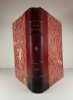
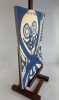
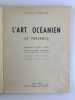
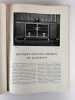
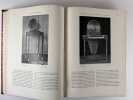
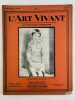
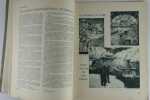
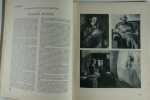
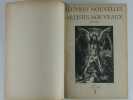
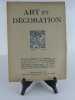
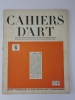
Paris Christian Zervos 1929 In-4 Broché Ed. originale
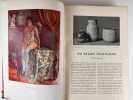
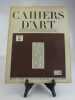
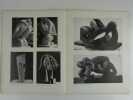
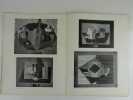
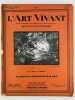
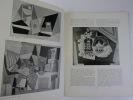
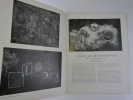
Mars avril 1929. Quatrième année. Sommaire : Christian ZERVOS : Oeuvres d'art océaniennes et inquiétudes d'aujourd'hui - TZARA Tristan: L'Art et l'Océanie - SYDOW Eckart von : Polynésie et Mélanésie l'art régional des mers du sud - Art primitif et psychanalyse d'après Eckart von Sydow - EICHHORN A. : L'Art chez les habitants du fleuve Sépik (Nouvelle Guinée) - FISCHER H. : L'Art dans les iles de la mer du sud - STEPHEN-CHAUVET : Sur l'art de l'archipel des Salomon, en général, et celui, inconnu, d'une de ses îles : l'île trésorerie - SPEISER Félix : L'Art plastique des Nouvelles Hébrides - WÖLFEL Dominique Joseph : Le Style de l'art néo-calédonien - CLOUZOT Henri : Sur l'art Maori - RADIGUET Max : Légendes religieuses et croyances des marquisiens - LEVEL André : Îles marquises - JAUSSEN Tepano : L'Ile de Pâques - Signes idéographiques de l'écriture de l'Ile de Pâques - 188 figures en noir dans le texte. In fine, rubrique sur les expositions à Paris et à l'étranger. Petite insolation en couverture. Bon 0
PRINCETON UNIV PR 1982 222 pages 19 304x2 286x25 654cm. 1982. Broché. 222 pages.
Très bon état de conservation intérieur propre bonne tenue étiquette sur le 2e plat
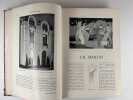
Marcel Aubert, né le 9 avril 1884 à Paris et mort le 28 décembre 1962 dans la même ville, est un historien de l'art et conservateur de musée français. 2 volumes complets,, brochés, 27x20cm, très bel état, illustrés. Préface d'Emile Male. TOME 1 : arts primitifs de l'Europe barbare , art de l'Asie antérieure , art égéen , art égyptien , art classique de la Méditerranée , art de la Perse ancienne , art des barbares , art chrétien d'Orient , art chrétien d'Occident , l'art roman , la sculpture romane , l'art gothique . 520 figures tirées en héliogravure . 380 Pages TOME 2 : la Renaissance , l'art du XVIIe siècle , l'art du XVIIIe s . l'art du XIXe s . l'art du XXe S . arts populaires de l'Europe , art de l'islam , art de l'Inde et de l'Asie centrale , art de l'Extreme-Orient , art des peuples primitifs de l'Afrique , de l'Amérique et de l'Océanie . 700 gravures dans le texte et 18 hors texte. 420 pages F. Didot Paris, 1932
, Brepols, 2022 Hardback, 232 pages, Size:216 x 280 mm, Illustrations:24 b/w, 31 col., Language: English. ISBN 9782503570310.
Summary The category of the "national school", paramount for the emerging discipline of art history in the 19th century, tended to dismiss the crucial encounters, confrontations and exchanges prompted by the fact that artists commonly travelled abroad, especially for the purposes of education and training. The aim of this volume is to address the complexities of this under-researched phenomenon, shedding light on the motivations and impact of transnational art education on artists' careers, on the actors and educational institutions involved (e.g. state-run academies, private schools or studios, museums, outdoor practices) and on the growing international networks connecting artists, patrons, collectors, dealers, critics and scholars. Even though the nation was a major category for historical actors of the period, it is essential to question the validity of the national framework as an analytical tool for current scholarship: our aim is therefore to propose a new reading of 19th-century art worlds based on the idea of circulations, entanglements and revised geographies. In the 19th century the destinations and itineraries of art students were reshaped by changing artistic trends and reputations, as well as by larger economic and geopolitical transformations engendered by the formation of new nation states and the remapping of Empires. The more or less temporary expatriations and the experience of difference during the key-period of artistic training generated divergent individual responses to foreign artistic contexts. Their responses were formed amidst persistent tensions between the elaboration of ?national art? and the appeal to artistic values that crossed national boundaries. Examining both recurring patterns as well as individual examples, the contributors to the volume analyze career strategies that took advantage of resources labeled as "foreign" and explore the implications of an increasingly internationalized art market for the choices of aspiring artists. Beyond the emphasis on the circulation of people/actors, specific attention is given to the transfers of teaching methods, techniques and art theoretical discourses between artistic centers. Contributions also take into consideration the more or less precarious living conditions of art students abroad, their modes of socialization and group formations, the experience of the city and participation in artistic and intellectual circles. TABLE OF CONTENTS INTRODUCTION France Nerlich and Eleonora Vratskidou, Transnational Art Education, or How to Rethink the History of Nineteenth-Century Art SHARING KNOWLEDGE, TESTING METHODS: Susanne M ller-Bechtel, Academic Life Drawing in Rome in the Second Half of the Eighteenth Century: Shaping a Common Language Claudia Denk, Traduttore, The German Edition of Pierre-Henri de Valenciennes' Treatise for Travelling Landscape Painters St phanie Baumewerd, A German Spin-Off of French Studio Practice: Karl Wilhelm Wach and the 'New' Berlin School of Painting Arnika Groenewald-Schmidt, Nino Costa's Transnational Training in the Roman Campagna DIFFRACTED PARIS Foteini Vlachou, Moving While Sitting Still? Columbano Bordalo Pinheiro Anticipating Paris in Lisbon Gitta Ho, Caroline Pockels's 'Peaceful Campagne in Paris': A Braunschweig Portrait Artist in the French Capital, or The Merits of the Ordinary Galina Mardilovich, What Russian Printmakers Found in Paris Davy Depelchin, Inheriting Networks: Three Generations of Belgian Artists Abroad Mayken Jonkman, Planting Seeds in Paris: Foreign Pupils as Investment; The Art Dealer Adolphe Goupil and the Dutch Painter Frederik Hendrik Kaemmerer BEING HERE AND ELSEWHERE Elena Chestnova, Gottfried Semper: Teaching and Writing on the Move F bio D'Almeida, A Brazilian Defence of the Reform of the cole des Beaux-Arts in Paris (1863): Pedro Am rico's Manifesto Pamela A. Ivinski, An American (Not Only) in Paris: The Continental Training of Mary Cassatt, 1866-74 Emily C. Burns, National or Cosmopolitan? Cultural Politics and Artists' Clubs in Paris, 1890-1910 BIBLIOGRAPHY INDEX
Bruxelles, CGER, 1984 Paperback, 232 pages, 20 x 21 cm.
Catalogue de l'exposition Bruxelles du 14 septembre au 11 novembre 1984 Notre galerie bruxelloise est r guli rement le th tre d?expositions th matiques qui gravitent autour de ce que nous avons l?habitude d?appeler l?art belge... Le Nu, l?Enfant et, pr sent, l?Orientalisme et l?Africanisme. Il ne fait aucun doute que l?avenir nous permettra de composer encore d?autres variations sur ce th me. Certains critiques nous posent souvent la m me question : qu ?entendez-vous par art belge ? Retenez-vous exclusivement l?art engendr l?int rieur des fronti res de la Belgique, soit depuis 1830 ? Ou pensez-vous que cette tiquette recouvre galement les ?uvres des artistes de nationalit belge, quel que soit l?endroit o ils se sont exprim s ? L?art a-t-il une nationalit ? On parle en effet d?art fran ais, anglais, italien, etc. La sp cificit artistique peut d?autre part refl ter un caract re populaire traditionnel : l?artflamand, l?art juif, l?art arm nien... Quoi qu ?il en soit et quelle que puisse tre notre opinion, l?art ne peut donc tre dissoci de la notion de nationalit , sans que ce concept soit n cessairement born par des fronti res. Quelle qu ?en soit la nature, l?art qui a vu, qui voit et qui verra le jour dans nos r gions est en quelque sorte greff sur une esp ce d?identit culturelle qui s?est cr e et d velopp e tout au long des si cles, au travers des changements de r gime et de fronti res. Un artiste, qu ?il soit crivain, compositeur, sculpteur, architecte ou cin aste, subit l?influence de son milieu et de la position qu ?il y occupe, de ses convictions religieuses et philosophiques, de son chelle des valeurs et de sa sensibilit , des structures politiques au sein desquelles il doit vivre et travailler, enfin, de tout ce qui peut influencer son inspiration artistique. Prenons l?exemple de Constantin Meunier. C?est dans un style r aliste qu ?ilpeignait et sculptait sujets religieux et sc nes historiques. Mais il tait surtout mu par le sort des mineurs et des souffleurs de verre. Il prit donc pour th me de pr dilection l?ouvrier et ses p nibles conditions de vie. Voyez Le coup de grisou. Eh bien, Meunier tait un artiste citadin typiquement belge. Ses ?uvres mondialement c l bres portaient l?estampille Belge . Et nous pourrions citer beaucoup d?autres exemples semblables. Dans le pass (et bien des fois aujourd?hui encore), les fronti res d?un Etat taient fix es la suite d? v nements'militaires ou d?accords internationaux. Et l?on convient maintenant qu ?un art ou qu ?une science qui se d veloppent l?int rieur de cet Etat en re oivent le label d?origine.
Aristide quillet 1947 in4. 1947. Relié. Librairie Aristide Quillet 1947. 4 volumes grand in-4 et comprenant au Tome I : L'art des Temps préhistoriques L'art antique du Proche-Orient et de la Méditerranée L'art en Asie jusqu'au 14e De L'art antique l'art médiéval. XI 472 pages ; Tome II : L'art Musulman L'art en occident du 5e au 11e siècle L'art roman l'Art gothique Les arts de l'Amérique précolombienne de l'Afrique Noire et de l'Océanie. 458 pages ; Tome III : L'art au 16e siècle en Italie la Renaissance en Europe au 16e L'art en Europe au 17e L'art en Extreme Orient du 14e à nos jours. 442 pages ; Tome IV : L'art en Europe au 18e L'art en France et en Europe au 19e et au 20e Aperçu sur la technique de la peinture. 445 pages. Avec une riche iconographie in et hors texte avec cartes et tableaux synoptiques dressées sous la direction de Luc Benoist
Bon Etat tranche jaunie haut et dos légèrement frotté
Neuchâtel, Ides et Calendes, [cop. 1986] 1 volume 24 x 26cm Cartonnage éditeur sous jaquette illustrée couleurs. 123p., 2 feuillets; nombreuses illustrations in texte, vignettes et pleines pages, en noir et en couleurs. Très bon état.
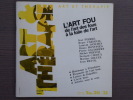
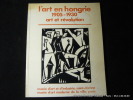
Où les critiques d'art et écrivains Jean-François BORY et Jacques DONGUY, spécialiste de la poésie expérimentale, "présentent [...] les diverses tendances qui se sont parfois opposées et parfois liées dans l'art d'aujourd'hui, l'art des dernières avant-gardes. Ecriture et art plastique, "Art and language", art conceptuel. La peinture ou "le visage de Narcisse", la photographie depuis Nadar. [...] le phénomène des revues: "Robho", "L'Art Vivant", "VH 101". Les écritures matérielles, concrètes, le Musée imaginaire à la Malraux à travers les livres d'art. L'art qui fonctionne à travers ces constats, la vidéo, la photographie aussi bien que la performance, l'art corporel ou le "Land-Art". Panorama des revues internationales: "Assembling" de Kostelanetz aux Etats-Unis, "Vou" au Japon. L'art sociologique ou l'art qui fonctionne comme coupe-circuit à l'information. L'art comme "récit privé", les aventuriers de l'art. [...] le phénomène des sponsors intellectuels, les groupes tels "Fluxus", les "Nouveaux Réalistes", l'art du côté de l'utopie, l'art comme attitude ou l'art comme tautologie. Le rôle des grandes expositions [...]. Le rôle des catalogues de ces expositions, la façon dont l'art circule et l'inflation de la documentation, des dossiers, des photographies. Peut-être la notion de trésors de guerre, "Kriegschatz". [...] le rapport de l'art avec la science, la recherche des cautions possibles. Le fonctionnement par concept, celui de "Image Bank" ou de "Fête Permanente". Toutes les personnalités de "ces vingt dernières secondes de l'art", Joseph Beuys, Georges Brecht, Raymond Hains et les autres à la recherche du rôle de l'artiste, du poète qui, peut-être, "est de montrer où se trouve l'être et non pas de pousser à l'aliénation" "(rabat de jaquette); chronologie des mouvements (1910-1976); notices sur les artistes cités; index des illustrateurs, artistes et groupes; nombreuses photos. Exemplaire bien complet de sa jaquette.
Thames & Hudson Ltd 1991 288 pages in8. 1991. Broché. 2 volume(s). 288 pages.
très bon état couvertures un peu défraîchies intérieurs propres
Brussel, Horta/ Cera, 2022 Bound, Hardcover, 288 pages: with 300 illustrations,. 33CM. ENGLISH TEXT *very fine ISBN 9782960202137.
The first volume Art Nouveau in Belgium innovation and ideal, of the project Belgian Art Nouveau Belge is organized around the figure of Victor Horta. To be architectural work may often be the center of attention stand, it is different with his countless creations in the field of decorative arts, be it ironwork, furniture, molds in plaster or frames in wood; there is currently no scientific publication yet that provides a complete overview outlines this topic. The same applies to the realizations of Georges Hob (1854-1936), Fernand Dubois (1861-1939), Paul Du Bois (1859-1938) and L on Ledru (1855-1926). For each of these five artists, a researcher provides an accompanying scientific article with bibliographical references and illustrations often never before were published. This first volume also contains a foreword that was written by Prof. Paul Greenhalgh, director of the Sainsbury Center for Visual Arts (Norwich), as well as an introductory text by Fran oise Aubry (former curator of the Horta Museum), titled Gustave Serrurier, Victor Horta, Paul Hankar and Henry van de Velde: create a new mobilier la fin du XIX si cle?. In his relentless quest, Horta gradually strives for more purity and sobriety in the pieces of furniture he is in front of makes customers - who are usually wealthy and like what is new. To take stock of its contribution to innovation of the decorative arts from the last decade of the 19th century century, including a close collaboration with the studio by the furniture maker Henri Pelseneer (1847-1909), no one is better placed than Fran oise Aubry, an indispensable reference in the research to Belgian Art Nouveau and internationally recognized specialist of the oeuvre of Horta. The architect Georges Hob , who was a self-taught artist and a great competitor of Horta, enjoyed considerable success in his lifetime in Belgium, before falling into oblivion. The rediscovery of his work, both in architecture and decorative arts, owes a lot to Pr. Raymond Balau (ENSAV La Cambre), who is an architect as well as an urban planner, art and architecture critic and researcher in the field of architecture from the twentieth century in Belgium. As part of the Belgian Art Nouveau project Belge, Balau will focus on two exhibitions in particular in which Horta and Hob played an important role, with in particular the Belgian part of the International Exhibition for Modern Decorative Arts in Turin in 1902 and the Modern Section Decorative Arts of the Belgian Pavilion of the Internationale Exhibition of Milan in 1906. VICTOR HORTA (1861-1947) Chair Mahogany wood and imitation crocodile leather Chateau de la Hulpe Woodworker Henri Pelseneer (1847-1909) Belgian Art Nouveau: Vision, Design and Craft
Turnhout, Brepols, 2009 Paperback, original editor's jacket, english, XI+174 pp., 41 b/w illustrations., 17x25 cm. NEX ISBN 9782503516202.
Studies in European Urban History (1100-1800). Studies in European Urban History (1100-1800) (SEUH 20). This collection of essays presents a status quaestionis concerning the dissemination of Flemish and Dutch art during the period 1400-1800, and highlights the role art auctions and dealers have played in this process. Auctions emerged as the primary channel for art sales at the end of the seventeenth century in the Low Countries and during the eighteenth century, countless local art collections were broken up and put up for auction. Especially (old master) paintings exchanged hands in great numbers at these public sales, and the finest pieces frequently ended up in foreign holdings. The activities of the professional art dealer form the focus of several essays. These intermediaries played an instrumental role in the commercialization and expansion of the art trade in early modern Europe. They had a profound impact on the history of collecting as they mediated and even influenced taste. Naturally, the role of art dealers changed over time. Therefore, the historians, art historians and economists who contributed to this volume have approached this phenomenon in an interdisciplinary fashion in order to properly understand how art markets functioned. In doing so, these essays explore the various ways in which art dealers helped shape markets for art, and how they facilitated the increasing volume of exports of Netherlandish art from the sixteenth century onwards.
Werner Adriaenssens, Daniel Alcouffe, Francoise Aubry, Odile Nouvel-Kammerer, Leon Lock, Guido Giovannini-Torelli,
Reference : 32428
, Frances Lincoln Publishers, London, 2011 Hardback with dusjacket in full color, 688 pages, Format: 325mm x 245mm, Over 400 colour photographs, very fine printed ! ***TRES BON ETAT/NEUF!!! ISBN 9780711232525.
This book explores the visual evolution of the legendary connoisseur and philanthropist Roberto Polo through a selection of over three hundred masterpieces and magnificent gemstones from the extraordinary collections which he has formed. At an early age, Roberto Polo revealed a powerful talent as a visual artist, exhibiting his work in major art museums and galleries. Thanks to his profound knowledge of art history and theory, he also revealed an astonishing talent for identifying exceptional art and gemstones from many periods and origins. Roberto Polo was educated at the Corcoran School of Art, where he was appointed professor at the precocious age of sixteen, and at Columbia University. At the age of twenty-four, he conceived and organized the now landmark exhibition Fashion as Fantasy, featuring works especially created by fifty-four exhibitors, including David Hockney, Robert Motherwell and Andy Warhol. Roberto Polo was instrumental in founding Citibank?s Fine Art Investment Services, the first department of its kind in the banking industry. In 1981, he left Citibank and became an independent art and gemstone investment advisor. During this period, he formed collections of French eighteenth, nineteenth and twentieth-century fine and decorative arts, as well as of gemstones, described by Le Journal des Arts as ?anthological?. In 1988, the French Republic bestowed on him the medal of Commandeur de l?ordre des Arts et de Lettres for his contributions to French art and culture.In the same year, he became the victim of a Kafkaesque judicial affair from which he rose in 1995, according to The New York Times , as ?the wonderful phoenix of the art market?, now championing Historical Design and Modernism independently and through Galerie Historismus. Described by Le Figaro as ?The Eye? and by Architectural Digest as ?The Trendsetter of the Art Market?, Roberto Polo continues to follow his edict that one should only acquire art which was revolutionary in its time.Exquisitely illustrated with over four hundred colour photographs, and with texts by leading art and jewellery historians, this book is a fascinating insight into the man described by Art & Auction , as ?one of the ten people who have made a difference in the art market? and an illuminating account of his forty years of collecting activity.
, Brepols, 2020 Hardback, iv + 277 pages, Size:216 x 280 mm, Illustrations:45 b/w, 61 col., 3 tables b/w., Language: English. ISBN 9782503584409.
Summary Making Waves: Crosscurrents in the Study of Nineteenth-Century Art honours the life work of Petra ten-Doesschate Chu, who continues to lead the field in the study of the art of the nineteenth century. The twenty-eight essays in this book are authored by some of her many friends, students, and colleagues, including seasoned academics and those at the beginning of their careers; museum professionals and private-sector arts administrators; and American, European, and Chinese scholars. Following Petra Chu's example, and avoiding opaque theoretical language and extended technical analysis, authors present original ideas, based primarily on the study of objects and their documented historical contexts. Though their methodologies are diverse, their purposes are clear and their language straight-forward. The essays thoughtfully and respectfully address the solid reality of the nineteenth century in all of its complex (and sometimes repugnant) sensibilities. They disrupt traditional art historical categories and methodologies, and highlight topics that have been long ignored and overlooked. Making Waves demonstrates, in no uncertain terms, that art historians still have much to say to each other and to their readers, and that nineteenth-century art has only begun to be explored in all its complexity and variety. TABLE OF CONTENTS Laurinda S. Dixon and Gabriel P. Weisberg, Art of the Long and Enduring Nineteenth Century: Order from Chaos Forward into the Past Laurinda S. Dixon, Suffering for Art: A Nineteenth-Century Revival of a Seventeenth-Century Motif Agnieszka Rosales-Rodriguez, The Dutch Dimension of Polish Painting in the Nineteenth Century Gary Schwartz, 'The Dreyfus Rembrandts: Smoke with No Gun' Style and Meaning Sally Webster, The Old-Master Tradition in the United States: Essential and Rejected Isabel L. Taube, William Merritt Chase's Unexpected Homage to Henri Regnault Gabriel P. Weisberg, A Conservative Becomes Progressive: P. A. J. Dagnan-Bouveret's Horses at the Watering Trough Reconsidered Art, Artifice, and the Natural World Anne Helmreich, The Crisis of Modern British Landscape Painting: The Case of Cecil Gordon Lawson Elizabeth Mansfield, Courbet and the Art of Making Waves Jenny Reynaerts, Pioneer: The Dutch-American Painter Alexander W st (1837-76) Packaging and Marketing the Female Figure Jennifer Milam, Greuze Girls and the Painterly Embodiment of Sexual Pleasure Leanne Zalewski, The 'Hysterical' Goddess: Jean-L on G r me's Bellona Ruth E. Iskin, The Material Culture and Gender of Print Connoisseurship in 1890s Paris Marjan Sterckx, The Heijermans Case: Censorship of the Female (Artist's) Gaze in Fin-de-Si cle Brussels The Politics of Display and Accessibility Rachel Esner, Jean-L on G r me: The Artist in Word and Image Francesco Freddolini, A Failed Commission for the Washington Mall: Aristodemo Costoli and the Columbus Group Madeleine Fidell-Beaufort, The Interaction of Artists, Dealers, and Collectors at Two Atypical Studio Buildings in Nineteenth-Century Paris Gail Feigenbaum, A Considerable Advantage: Joint Account and the Transatlantic Art Market ca. 1900 Crossing Boundaries Patricia Mainardi, Crisscrossing the Channel, Depicted by Themselves Roberto C. Ferrari, Dressed la Perse: An Orientalist Portrait of James Justinian Morier Alia Nour, Egyptian-French Cultural Encounters at the Opening of the Suez Canal in 1869 Laura Coyle, Windows and Touchstones: A Photograph Album from Connecticut, 1890-1910 Public Taste and Popular Culture Kasia Murawska-Muthesius, Chopin and Caricature Therese Dolan, Sonic Strategies: Manet's Street Singers Laurie Dahlberg, 'Strange Abominations': French Tableau Photography and its Critics Forward into the Present Charlotte Nichols, Inside Out: The Fortuny 'Delphos' and the Renaissance Camicia Liu Jing, From Realism to Socialist Realism: The Revolutionary Interpretation of Nineteenth-Century European Realist Art in Red China of the Mid-Twentieth Century Sharon Flescher, World War II Lingers in Restitution Claims for Nineteenth- and Early Twentieth-Century Art Emily Pugh, Pop Cultures, Now and Then: Mass Media and Modern Design in the Postwar U.S. Petra Ten-Doesschate Chu Publications Contributors
, Brepols, 2019 Hardback, 335 pages, Size:220 x 280 mm, Illustrations:75 b/w, 75 col., Language: English. ISBN 9782503579795.
Summary Whether a painting, a sculpture, or a building, works of art in early modern Europe must achieve the highest degree of perfection. If in the Middle Ages perfection is mostly perceived as a technical quality inherent in craftsmanship-a quality that can be judged according to often unspoken criteria agreed upon by the members of a guild-from the fifteenth century onwards perfection comes to incorporate a set of rhetorical and literary qualities originally extraneous to art making. Furthermore, perfection becomes a transcendent quality: something that cannot be measured only in terms of craftsmanship. In the Baroque period, perfection turns into obsession as a result of the emergence of historical models of artistic evolution in which perfection is already historically embodied-in the first place, Vasari's investiture of Michelangelo as a universal canon for painting, sculpture, and architecture. This book aims to define, analyze, and reassess the concept of perfection in the arts and architecture of early modern Europe. What is perfection? What makes a work of art unique, emblematic, or irreplaceable? Does perfection necessarily relate to individuality? Is the perfect work connate with or independent from its author? Can perfection be reproduced or represented? How do artists react to perfection? How do post-Vasarian models of art history come to terms with perfection? To what extent perfection in early modern Europe is the matter of rhetoric, literary theories, theology, and even scientific observation? TABLE OF CONTENTS Introduction Measure, Number and Weight: Perfection in Medieval Art and Thought Benjamin Zweig Perfection as Rhetorical Techne and Aesthetic Ideal in the Renaissance Discourse on Art Valeska von Rosen Crafting Perfection: Leon Battista Alberti, Language, and the Art of Building Dario Donetti The Palindromic Logic of D rer's Double-Sided Gift Shira Brisman Michelangelo and la cosa mirabile Victor I. Stoichita Bronzino's Beauty Stuart Lingo The Perfection of Pictorial Evidence Klaus Kr ger The Renaissance Masterpiece: Giorgio Vasari on Perfection Lorenzo Pericolo Seeking Perfection: Scamozzi in Theory, Practice, and Posterity Andrew Hopkins Metaprints in Seventeenth-Century Antwerp Caroline Fowler "Per natura capaci di ogni ornamento e perfezzione": Nicolas Poussin and Perfection Henry Keazor The Limits of Perfection: Giovan Pietro Bellori on Celerit and Facilit Elisabeth Oy-Marra Passeri's Prologue, the Paragone, and the Hardness of Sculpture Estelle Lingo
, Brepols, 2019 Paperback, iv + 441 pages, Size:216 x 280 mm, Illustrations:202 b/w, 16 col., 4 tables b/w., Languages: English, French. ISBN 9782503578033.
Summary From a Byzantine province to an independent Latin kingdom under the Lusignan dynasty (11929/27-1474/89) and a colonial outpost of the Venetian maritime empire (1474/89-1571), the island of Cyprus, at the eastern end of the Mediterranean, is blessed with a rich and diverse medieval cultural heritage. Its monumental art and its material culture - architecture, fresco and icon painting, woodcarving, metalwork, glazed ceramics, and so on - exist at the crossroads of several artistic traditions often thought to represent mutually exclusive visual languages, such as the late medieval Gothic and Byzantine styles (in their respective variants), the local art of the Levant, and the classicizing mode of the Italian Renaissance. It is precisely this seemingly 'composite' nature of medieval Cypriot artistic production that, over the years, has both divided and united scholars attempting to match styles and forms to the patronage of the various religious, ethnic, and linguistic groups (Latins, Greeks, Syrians, Armenians, and others) making up the island's complex social fabric. The seventeen essays in this volume offer a snapshot of the most recent scholarship on the art, archaeology, and material culture of Cyprus under Latin rule. Established and emerging art historians and archaeologists, both trained Byzantinists and specialists of European medieval art, come together to re-appraise the field in the light of current research, put forward new evidence from fresh archival, archaeological, or archaeometric research, and propose novel interpretations destined to blaze exciting new pathways to future study of this fascinating body of material. TABLE OF CONTENTS Michalis Olympios and Maria Parani Introduction: Towards a More Holistic Appreciation of the Art, Archaeology, and Material Culture of Lusignan and Venetian Cyprus I. Rethinking Visual Culture in Lusignan Cyprus Michele Bacci The Art of Lusignan Cyprus and the Christian East: Some Thoughts on Historiography and Methodology Anthi A. Andronikou A Panel in Search of Identity: The Madonna di Andria between Apulia and Cyprus Dimitrios Minasidis Hunting with Falcons and Its Symbolism: A Depiction in the Royal Chapel at Pyrga II. Bau und Kult: Architecture and Cult in the Long Perspective Nikolas Bakirtzis Revisiting the Monastic Legacy of Saint Sozomenos near Potamia Thomas Kaffenberger A Rural Church for an Urban Elite? Thoughts on the Unfinished Sixteenth-Century Church of Agios Sozomenos Max Ritter Famagusta and Its Environs in the Venetian Period: The Foundation of the Monastery of Ayia Napa and the Origin of Its Fountain Guido Petras A Stone Iconostasis in a Multi-Confessional Sanctuary in Lusignan and Venetian Cyprus? An Art-historical Approach to the Cave Church in Ayia Napa III. In Search of the Lost Urban Landscapes of Lusignan and Venetian Cyprus Hesperia Iliadou and Philippe Tr lat La repr sentation picturale d'une architecture disparue: quelques sites chypriotes au d but de la p riode v nitienne illustr s dans un manuscrit du XVe si cle Nasso Chrysochou The Investigation and Comprehension of a Medieval Building in the Walled City of Nicosia IV. Facets of Lusignan and Venetian Cyprus through the Lens of Archaeology Fryni Hadjichristofi New Light on the Topography of Nicosia: The "Archbishopric" Excavation Stylianos Perdikis Avli, Tillyria: An Unidentified Medieval Edifice Athanasios K. Vionis, Maria Dikomitou-Eliadou, Maria Roumpou, Nick Kalogeropoulos, and Vassilis Kilikoglou Stirring Pots on Fire: Medieval Technology, Diet, and Daily Life in Cyprus V. Art Production and Consumption in Venetian Cyprus Stella Frigerio-Zeniou Quelques r flexions et quelques portes en vue d'une nouvelle approche des iconostases chypriotes du XVIe si cle Elena Poyiadji-Richter Metalwork Products Destined for Cyprus? The Sixteenth-Century Dishes in the Leventis Municipal Museum of Nicosia Georgios E. Markou Negotiating Identity and Status: The Silverware of the Cypriot Nobles in Renaissance Venice Tassos Papacostas Renaissance Portrait Medals for Eminent Cypriots: An Untold yet Telling Tale Bibliography
, Brepols, 2020 Hardback, iv + 185 pages, Size:216 x 280 mm, Illustrations:51 col., Language: English. ISBN 9782503583983.
Summary The collection of essays gathered in this volume investigates the interaction between art and relics as a distinct historical relevance for devotional art of Early Modernity and the Renaissance. Recent studies in the material culture of artifacts from these periods have drawn increasing attention to a sense of material tangibility derived from relics. Putting that conclusion into perspective, this edited collection focuses on the aesthetic meaning generated by a specific material culture of sanctity - one in which artists based their practice upon the nature, variety, and history of relics. Works of art that contained relics shared in the aura of the relics, defining themselves as non-substitutable signs, or signs that preserved the physical relationship to the immutable nature and origin of relics. As studied in this volume, funerary monuments, chapel decorations, altarpieces, liturgical objects, and sacred sites yielded an unordinary aesthetic meaning, one that captured and at the same time transmitted the histories linked to a relic. Each chapter emphasizes the specific history contained within works of art premised upon relics and thus forever embedded in the relics' status as sacred originals.. TABLE OF CONTENTS I. Relics in the Art, Decoration, and Architectural Memory of Early Modern Chapels Kristina Keogh, Authenticating the Holy Body: Transitions between Relic and Image in the Early Modern Cults of Caterina de' Vigri and Maria Maddalena de' Pazzi Cloe Cavero de Carondelet, Reframing a Medieval Miracle in Early Modern Spain: The Origins of Our Lady del Sagrario of Toledo Alison Fleming, Art and the Relics of St. Francis Xavier in Dialogue II. Relics Integral to Sacred Spaces and Works of Art Sarah Cadagin, The Interrelation of Curtains, Altarpieces, Relics: Domenico Ghirlandaio's Response to the Cult of the Volto Santo in Lucca Cathedral Suzanna Simor, Relics and the Visualization of the Christian Creed Livia Stoenescu, The Place of Relics in Loca Sancta, Medieval Combinations, and the Catholic Reform III. Artists Engaging with Relics J r mie Koering, Michelangelo's Relics: Some Aspects of Artistic Devotion in Cinquecento Italy Sarah Dillon, The Duality of Glass: Revealing and Concealing Holy Relics in Early Modern Italy
, Brepols - Harvey Miller, 2021 Hardback, 436 pages, Size:210 x 275 mm, Illustrations:22 b/w, 132 col., Language: English. ISBN 9781912554744.
Summary This volume is published in honour of Paul Binski, whose scholarship and teaching have done so much to illuminate the material and intellectual worlds of Gothic art and architecture. Remarkable for its material scope and philosophical depth, Paul's work has had a powerful influence on the current state of the field: this is reflected here in thirty-four essays on buildings, works of art and ideas in a wide range of historical and geographical contexts, from Iberia to Scandinavia and Italy to Ireland. Consistently fresh in their scholarship, these essays combine to make an important contribution to medieval art history. In doing so they reflect the admiration and affection which Paul inspires in his students and colleagues. With contributions by: Gabriel Byng, Meredith Cohen, Emily Guerry, James Hillson, Ethan Matt Kavaler, Tom Nickson, Zo Opa?i?, Claudia Bolgia, Jean-Marie Guillou t, Justin E. A. Kroesen, Julian Luxford, Robert Mills, John Munns, Matthew M. Reeve, Laura Slater, Beth Williamson, Jessica Berenbeim, Spike Bucklow, Marcia Kupfer, Jean-Pascal Pouzet, Miri Rubin, Kathryn M. Rudy, Roc o S nchez Ameijeiras, Lucy Wrapson, Patrick Zutshi, Mary Carruthers, Jill Caskey, Lucy Donkin, Kate Heard, Robert Maniura, Alexander Marr, M. A. Michael, Conrad Rudolph, Betsy Sears. TABLE OF CONTENTS Part One: Gothic Architecture 1. Gabriel Byng - The 'Great Rebuilding' of the Late Middle Ages: Revising the longue dur e History of the Gothic Parish Church 2. Meredith Cohen - 'The Forest through the Trees': The Pier as a Seed Plan at the Lady Chapel of Saint-Germain des Pr s 3. Emily Guerry - A Gothic Throne for the King of Kings: A Re-evaluation of the Design, Date, and Function of the Sainte-Chapelle Tribune 4. James Hillson - Linearity and the Gothic Style: Architectural Conception in England and France, 1200-1400 5. Ethan Matt Kavaler - Diamonds are Forever: Cell Vaults and the Beginnings of History 6. Tom Nickson - Describing Architecture in Thirteenth-Century Spain 7. Zo Opa?i? - Cui bono? The Founding and Funding of Medieval Religious Institutions under Charles IV Part Two: Gothic Sculpture and its Environment 8. Claudia Bolgia - The 'Tabernacles' War' II, c.1400: New Light on the Competition between Icons and Relics in Late Medieval Rome 9. Jean-Marie Guillou t - Epigraphic One-Upmanship: Remarks about Text-Image Relationship in Fifteenth Century Monumental Sculpture 10. Justin E. A. Kroesen - Gotland Wonder: Unique High Medieval Interior Ensembles on a Baltic Island 11. Julian Luxford - John and Johanna Ormond's Grave 12. Robert Mills - Wild Forms: The Art of East Anglian Wodewoses 13. John Munns - The Thirteenth-Century Pyx Cover at Wells Cathedral 14. Matthew M. Reeve - Fragments from Wisdom's House: The Lady chapel Juxta Claustrum at Wells Cathedral 15. Laura Slater - Musical Wit and Courtly Connections at Cogges 16. Beth Williamson - The Kilcorban Madonna: Joy and Potential in an Irish Wooden Virgin and Child Part Three: Gothic Painting, Manuscripts and Poetics 17. Jessica Berenbeim - Recapitulation: A Medieval Table of Contents 18. Spike Bucklow - The Economics of Blue and Gold 19. Marcia Kupfer - A Hill of Foreskins: Circumcision in the Alba Bible 20. Jean-Pascal Pouzet - Notes towards a Poetics of Western Medieval Manuscript Form - with an Application to Illuminated Manuscripts in Cambridge University Library 21. Miri Rubin - Ecclesia and Synagoga in Time 22. Kathryn M. Rudy - The Bolton/Blackburn Hours (York Minster Add. Ms. 2): A New Solution to its Text-Image Disjunctions using a Structural Model 23. Roc o S nchez Ameijeiras - If the Sea Were Made of Ink: A Word on Medieval Visual Poetry 24. Lucy Wrapson - A Royal Portrait? Uncovering the Identity of Saints on the Latemedieval Screen at North Tuddenham, Norfolk 25. Patrick Zutshi - The Veronica Images Painted by Matteo Giovannetti for Pope Urban V (1369) Part Four: Gothic Art and Ideas 26. Mary Carruthers - Becoming Like an Angel: The Concept of Sublimis in Monastic Contemplation and in Alchemy 27. Jill Caskey - Treasure, Taxonomy, and Transformation in the Inventories of San Nicola, Bari 28. Lucy Donkin - Mining Mount Tabor: the Schauinsland Window at the Minster of Freiburg im Breisgau 29. Kate Heard - The Ecclesiastical Textiles of Humphrey, Duke of Gloucester 30. Robert Maniura - Why Study Miraculous Images? 31. Alexander Marr - Working by Wit Alone: Aspects of Ingenuity in D rer 32. M. A. Michael - Inventing Gothic Painting: Creating Fine Art 33. Conrad Rudolph - The Evidence of the Training of Tour Guides in the Middle Ages 34. Betsy Sears - Gothic Logic: Panofsky's Unwritten Book on 'The Gothic Style' Index of Buildings, Works of Art, Manuscripts, and Medieval Authors
, Brepols, 2021 Paperback, 402 pages, Size:216 x 280 mm, Illustrations:130 col., 19 tables b/w., Language: English. ISBN 9782503596242.
Summary Church interiors, cortegaerdjes, scenes of everyday life, tronies, landscapes, spoockerijen, group portraits, bambocciate, hunting scenes, history paintings, sottoboschi, still lives and many other subjects: the wide variety of pictorial genres and sub-genres in which Dutch artists specialized is a key component in our perception of Dutch seventeenth-century art. Yet the epistemological framework constituted by genre definitions, conventions and hierarchies is far from self-evident, nor does it necessarily reflect how people in the seventeenth-century thought about artworks. In fact, art literature of the period is largely silent on these matters and artists do not appear to have followed an established set of principles. This volume examines the way pictorial genres can be, and have been, defined by artists, theorists, audiences and art historians; how individual artists conceived the subject matter of their artworks; and how society and the art market contributed to the development of certain subjects. As such, it embraces the complex and often messy reality of pictorial genres in seventeenth-century Dutch art. TABLE OF CONTENTS Questioning Pictorial Genres in Dutch Seventeenth-Century Art: Introduction Marije Osnabrugge (University of Geneva) I. Defining genre The So-Called Hierarchy of Genres in Seventeenth-Century Dutch Art Theory Jan Blanc (University of Geneva) Spotting Specialists: A Digital Approach to Contemporary Concepts of Genre and Specialisation Weixuan Li (University of Amsterdam / Huygens - KNAW) The Seventeenth-Century Dutch Portrait: An Unstable Genre Ann Jensen Adams (UC Santa Barbara) The Bambocciata: Investigating a "Would-be genre" Suzanne Baverez (ENS ULM/EPHE, Paris) From Genre Scenes l'antique to genre s rieux : the Contribution of Gerard de Lairesse Tijana ?akula (Utrecht University) Definition through Appreciation: The Corporate Group Portrait from the Seventeenth until the Twenty-First Century Norbert Middelkoop (Amsterdam Museum) II. Artists and Genres Guns and Roses: Versatility and Variety in the Oeuvre of Jacques de Gheyn Susanne Bartels (University of Geneva / RKD The Hague) Otto Marseus van Schrieck and the Sottobosco Paintings: Hybrid Subject as a form of Automimesis. VE. Mandrij (Unversity of Konstanz) Rembrandt as Genre and History Painter: Picturing Pain Stephanie Dickey (Queen's University, Kingston) Defining the Hybrid Genre in the Context of Saenredam's Perspectives Helen Hillyard (Dulwich Picture Gallery, London) The 'Little Street' - Vermeer's Writing on the Wall Reindert Falkenburg (NYU Abu Dabi) III. The Market and Society The Dominance of History Painting: Social Class and Subject Matter of Paintings in Amsterdam, 1650-1700 Angela Jager (University of Geneva) Rethinking Swanenburg: The Rise and Fortune of New Iconographies of the 'Hell' in Italy and the Northern Netherlands Tania De Nile (MiBAC, Rome) La Sc ne de Corps de Garde comme Autorepr sentation L onard Pouy (Haute cole de la Joaillerie, Paris) Honour and Shame in Dutch Seventeenth-Century Art and Culture Wayne Franits (Syracuse University)
BRETON (André) - . VERDIER (Philippe). - HAUTECOEUR (Louis). - CHASTEL (André) et GRAND (Paule-Marie).
Reference : 31573
(1954)
Paris, Le Club Français du livre, Collection " Formes de l'Art ", 1954_1957. 5 volumes in-4, (28 x 22 cm), . Reliure éditeur en toile écrue. (Maquette de J. Darche).
Édition originale du texte d'André Breton. SÉRIE COMPLÈTE, comprenant : 1- BRETON (A.). L'Art magique. 2- VERDIER (Ph.). L'Art religieux. 3- HAUTECOEUR (Louis). L'Art classique. 4- L'Art baroque. 5- CHASTEL (A.) et GRAND (P.-M.). L'Art pour l'art. Complet des 5 index analytiques, importante iconographie en noir et en couleur. Le volume sur l'Art Magique par André Breton présente une enquête sur ce sujet avec les réponses de Martin Heidegger, Maurice Blanchot, André Malraux, Georges Bataille, Jean Paulhan, Herbert Read, Claude Lévi-Strauss, Jean Herbert, Leonora Carrington, René Magritte, J. Evola, Roger Caillois, F. Le Lionnais, Michel Butor, Pierre Klossowski, Julien Gracq, André Pieyre de Mandiargues, Joyce Mansour, Octavio Paz, Benjamin Péret, René Huyghe, Jean Markale, Paul Sérant, Noël de la Houssaye, Raymond Abellio, Denis Saurat, René Nelli, J.-A. Rony, etc. SUPERBE ENSEMBLE A L'ICONOGRAPHIE EXCEPTIONNELLE. Toutes les planches sont protégées par des serpentes. Ensemble en parfait état. Photos sur demande.
, Brepols, 2022 Paperback, 408 pages, Size:210 x 270 mm, Illustrations:41 b/w, 127 col., Language(s):French, English. ISBN 9782503599014.
Summary Dans l'histoire occidentale, la premie?re modernite? n'est pas seulement l' ge de l' Humanisme , des g nies de l'art, des Grandes d couvertes et de la R volution scientifique , elle marque aussi l'av nement d'une r flexion in dite sur les origines, o les individus se prennent imaginer et r inventer les commencements pour mieux penser un pr sent qui ne cesse de se reconfigurer. Cette Renaissance des origines se nourrit des divers mythes et croyances cosmogoniques et anthropogoniques, mais aussi des g n alogies symboliques du pouvoir qui, se multipliant dans toute l'Europe, t moignent de l'investissement politique du temps originel. Pour les artistes - dont les productions furent les principaux agents de cette r flexion -, la figuration des origines appara t ins parable des mythes de naissance de l'art et de la mise en sce?ne du travail artistique. Voir ou revoir la Renaissance la lumi re des origines - du monde, de l'humanit , de la polis et de l'art -, telle est l'ambition de ce volume qui r unit les contributions de sp cialistes en sciences humaines - histoire de l'art, histoire, ge?ographie, litte?rature ou philosophie -, intervenus l'occasion du colloque La Renaissance des origines qui s'est tenu en juin 2018 l'Universit de Tel Aviv et l'Universit Paris 1 Panth on-Sorbonne. TABLE OF CONTENTS PARTIE INTRODUCTIVE Sefy Hendler, Florian M tral et Philippe Morel, l'origine des origines. Une introduction Frank Lestringant, Renaissance des origines (In memoriam Michel Jeanneret) Michel Jeanneret, La renaissance de la cr ation I. COSMOGONIE ET ANTHROPOGONIE Philippe Morel, Figurer le chaos la Renaissance Ang le Tence, Aux origines des anges. Cr ation et chute ang liques dans la peinture de la Renaissance, de la fin du XVe si cle aux premi res d cennies du XVIe si cle Florian M tral, Post tenebras lux. Repr senter la s paration originelle du monde Frank Lestringant, La Cr ation du monde selon Du Bartas et les po mes cosmogoniques la fin du XVIe si cle Guillaume Cassegrain, L'origine animale. propos de la Cr ation des Animaux de Paolo Uccello Susanna Gambino-Longo, Imaginaire primitiviste et fondation de nouveaux savoirs : l' vocation de l'humanite? primitive dans les ?uvres philosophiques d'Alessandro Piccolomini II. ORIGINES SPIRITUELLES ET G N ALOGIES DU POUVOIR Anne-Laure Imbert, ? chercher comme on fait la source des grands fleuves??. La figuration de la gen se r mitique du monachisme dans deux Th ba des de Fra Angelico Flavia Buzzetta, M tamorphose spirituelle et nature originaire : la notion de paling n sie humaine chez les cabbalistes chr tiens de la Renaissance Elli Doulkaridou, Sanctifier le temps, le monde et l'humanit . Figures des origines dans les Heures Farn se Henri de Riedmatten, De la fabrique des origines : la figure de Lucr ce Rome autour de 1500 Etienne Bourdon, Une lecture politico-religieuse des origines de la France la Renaissance : la Tenture de l'Histoire des Gaules (Beauvais, vers 1530) III. LA GEN SE DU TRAVAIL ARTISTIQUE J r mie Koering, Germination : des origines v g tales du processus artistique la Renaissance Thalia Allington-Wood, Violent Generation and Geologic Origins in the Sacro Bosco at Bomarzo Juliette Ferdinand, Un art d nu d'artifice ? Les ?uvres de Bernard Palissy et la qu te des origines, entre ambigu t s esth tiques et revendications religieuses Claudia La Malfa, On the Composition of the World, Vasari and the Arretine Vases, and on the Origin of Donatello's Schiacciato Sefy Hendler, Entre tenebre et luce : la cr ation de l'image de Michel-Ange Chiara Franceschini, Captive Origins. Giorgio Vasari's Tavola della Concezione as a Manifesto for Artistic Success EPILOGUE Ste?phane Toussaint, Eros l'origine de l'art INDEX Index des noms d'artistes Index des personnalit s historiques Index des personnalit s scientifiques Index des oeuvres d'art (artistes connus) Index des oeuvres d'art (artistes anonymes)
Reference : 63934
Leuven, UPL - KU Leuven, 2024 Paperback, 272 pages, 234 x 156 x 13 mm,Illustrations and other content description: 32 pp. in colour. English text. ISBN 9789462703780.
Museum collections of Asian art in Central Europe. Rather than centering on the well-known collections in Western European and North American museums, Collecting Asian Art turns to museum collections of Asian art in Central Europe which emerged from the late 19th century onwards. Highlighting the dimensions of Central European connectedness, this volume explores how these collections evolved and changed under changing cultural and political conditions from the pre-World War I to the post-World War II periods. With a primary focus on collections of East Asian, South Asian, and West Asian art in Vienna, Prague, Berlin, Warsaw, Krak w, Budapest, and Ljubljana, it outlines the transregional connections and networks that gradually developed. Collecting Asian Art locates Asian art across the twentieth-century in Central Europe via discourse and ideology, and discusses key collections and the way individual collectors built their networks. It thus explores transregional connections that developed through collecting activities and strategies in the prewar, interwar and postwar eras. Contributors also examine the personal connections between a group of Indologists from postwar Prague and modernist Indian artists from the early 1950s to the 1980s and also discuss the systematic archiving of East Asian art collections in Slovenia. A concluding conversation looks at colonisation and decolonisation from a broader perspective by approaching it through recent art historical discussions on the global dimensions of modernism. By defining the region through its external relationships and its entanglements with regions across Asia rather than as a self-contained unit, the contributions in this volume outline how these transregional connections and networks evolved and changed over time, thus highlighting their singularity in comparison to developments in Western Europe. Based on recent research, Collecting Asian Art reveals neglected sources while reinterpreting well-known ones. Contributors: Zdenka Klimtov (National Gallery in Prague); Agnieszka Kluczewska-W jcik (Polish Institute of World Art Studies); Partha Mitter (University of Sussex); Michaela Pej?ochov (National Gallery in Prague); Uta Rahman Steinert (Staatliche Museen zu Berlin); Iv n Sz nt (E tv s Lor nd University); Nata?a Vampelj Suhadolnik (University of Ljubljana); Johannes Wieninger (MAK ? Museum of Applied Arts); Tom ? Winter (Czech Academy of Sciences).
, Brepols, 2023 Hardback, 234 pages, Size:216 x 280 mm, Illustrations:49 b/w, 58 col., 3 tables col., Language: French. ISBN 9782503599953.
Summary Pourquoi collecter et exposer textiles, verreries, c ramiques, meubles ou bijoux, t moins d'un pass pr industriel, au moment m me o l'av nement de la machine et l'expansion des march s bouleversent les processus de fabrication et de commercialisation? Suivant quelles modalit s la pr sentation de ces artefacts a t articule aux productions contemporaines, dans un contexte de concurrence internationale stimule par les expositions universelles ? Pens s au d part comme des ensembles vocation p dagogique, mais int grant souvent des vises conservatrices, les muses d'art industriel et d'art d coratif sont porteurs d'identit s multiples, ce qui explique l' volution des d nominations, leurs vicissitudes et leur existence parfois ph m re. Les travaux d sormais nombreux sur la mus ologie, et sur les arts d coratifs placent ces institutions au c?ur du questionnement autour de l'origine et des finalit s des collections publiques, en tant que lieux de formation pratique et de d bats thoriques sur les relations entre l'art, l'industrie et le march . Cet ouvrage est le premier en France consacr l'histoire des muses d'art industriel et d coratif. Il entend offrir un large panorama de cette typologie telle qu'elle s'est d cline dans l'Europe enti re, depuis son apparition dans les ann es 1830, jusqu' son puisement dans les premi res d cennies du XXe sicle. Seule une enqu te collective pouvait rendre compte des sp cificit s des situations nationales et de la diversit des processus de valorisation d'objets au statut intrins quement incertain, entre fonction d'usage, valeur patrimoniale et mod les d'apprentissage. TABLE OF CONTENTS Introduction g n rale 1-Aziza Gril-Mariotte, Les enjeux du mus e d'art industriel entre th ories et pratiques 2-Rossella Froissart, Pr misses aux mus es d'arts industriels et d coratifs : une id e fran aise Premi re partie Un mus e pour difier le go t et diffuser des mod les 3-Jean-Fran ois Luneau, Le r ve d'un mus e industriel chez Claude Aim Chenavard 4-H l ne Bocard et C line Trautmann-Waller, Alexander von Minutoli : de la collection au mus e, du mus e l'album photographique 5-Marion Falaise, Le mus e d'Art et d'Industrie de Lyon et le mod le du South Kensington Museum dans le projet de Natalis Rondot 6-Isaline Del derray-Oguey, Les mus es d'art industriel en Suisse et de la seconde r forme des arts appliqu s 7-Malgorzata Dabrowska, Les collections du Mus e technique et industriel Cracovie, entre exposition et ducation 8-Lada Hubatov -Vackov , Les mod les londonien et viennois des deux mus es de um?leck pr?mysl de Prague 9-Daniela N. Prina, La cr ation d'un South Kensington belge ou l'histoire d'un mariage imparfait entre le beau et l'utile 10- lise K?ring et Elke Mittmann, Un mus e du temps pr sent pour une production moderne : le Deutsches Museum f r Kunst in Handel und Gewerbe de Karl-Ernst Osthaus 11-Mark Gregory d'Apuzzo, Le Mus e d'art industriel Davia Bargellini de Bologne : cr er des ensembles pour mieux transmettre les savoirs Deuxi me partie De la collection au mus e. Nouveaux regards sur les arts d coratifs 12- lodie Baillot, Le Louvre contre S vres, S vres contre les ogres du Louvre : l'affaire du legs Davillier 13-Lucie Chopard, Les collections chinoises de l'Union centrale des arts d coratifs entre inspiration technique et valorisation esth tique 14-Mathieu Caron, Le mus e du Garde-Meuble (1879-1901) ou l'aboutissement d'une politique de patrimonialisation du mobilier fran ais au XIXe si cle 15-Camille Mestdagh, Du chef-d'?uvre de mus e au mod le d'atelier : les collections publiques de mobilier et la vogue des copies 16-Beno t Coutancier, Marie Labadi (Grobet) et ses poux : collectionneurs moyens ou architectes d'int rieur autodidactes ? 17-Paola Cordera, Les arts d coratifs mis en sc ne l'Exposition r trospective de Milan de 1874 18-Daniele Galleni, La Galleria degli arazzi Florence : un nouveau regard sur la tapisserie 19-Nadia Barrella, Le mus e Correale de Carlo Giovene, un livre facile pour red couvrir les arts appliqu s napolitains 20-Agnieszka Kluczewska-W jcik, Il n'y a qu'un seul art? . Feliks Jasie?ski et sa collection d'arts d coratifs au Mus e national de Cracovie 21-B nedicte Gady, Paris-New York : la cr ation du Cooper Union Museum for the Arts of Decoration au miroir du mus e des Arts d coratifs
, Brepols, 2023 Paperback, 268 pages, Size:156 x 234 mm, Illustrations:45 b/w, Language: English. ISBN 9782503595948.
Summary Starting from a political reality, which is, at the same time, artistic and cultural, the book Ars Hasburgica aims to review the still so common historiographical conception of the Renaissance that conceives this period from a geographically Italocentric, artistically classicist and politically centered the idea of "national" arts and schools. But Renaissance is a more global and complex phenomenon. What this book aims to offer is an idea of the art of that period that considers the role played by the Habsburg dynasty and its various courts in this period, trying to verify whether, by applying other historiographic models, and having the art of the Casa de Austria as a focus, traditional ideas can continue to be maintained well into the twenty-first century. We refer to the so-called "Vasari paradigm", on which art history of the sixteenth century has largely been built over the last centuries. It is also intended to structure concepts about the art of the period not so much around nationalist considerations and identities of the arts, but to raise these issues throughout ideas such as that of the court as a political, artistic and cultural sphere, in the wake of the classical studies by Norbert Elias, Amedeo Quondam or Carlo Ossola. TABLE OF CONTENTS Introduction: Ars Habsburgica, or New Perspectives on Sixteenth-Century European Art Fernando Checa and Miguel ngel Zalama Habsburg Politics and Cultures in the Sixteenth Century: the Cosmopolitan Iberian Experience of Empires and Kingdoms Fernando Bouza A Theory of Art for the Habsburg Renaissance Fernando Checa Rethinking Vasari: Art and Arts in the Sixteenth Century Miguel ngel Zalama The Antithesis between the Vasarian Canon and the Habsburg Model of the Arts: Defining National Identity in the Italian Risorgimento Matteo Mancini Luxury and Identity in the Sixteenth-Century Habsburg Courts Jes s F. Pascual Molina Food as a Strategy of Power: the Political Role of Banquets in Prince Philips's Felic simo Viaje (1548-1551) Vanessa Quintanar Cabello His Polis: The Habsburg Naval Epic in the Mediterranean V ctor M nguez Habsburg Mars: The House of Austria and the Artistic Representation of Land Warfare Antonio Gozalbo Nadal Sixteenth-Century Notions on Spolia and Triumph Representation Antonio Urqu zar-Herrera The Armamentarium Heroicum of Archduke Ferdinand of Tyrol Christian Beaufort-Spontin The Habsburgs and Emblematic Literature: a Historiographical Assessment Patricia Andr s Gonz lez Books and Libraries in the Construction of the Habsburg Dynasty's Image during the Sixteenth Century Jos Luis Gonzalo S nchez-Molero Epic and Truth: Writing for the Habsburgs in Sixteenth-Century Spain Mar a Jos Vega Philip II as Rex Pacificus: Belligerence and Pacifism in Epic Versions of the Battle of Saint-Quentin (1557) Lara Vil Notes on the Contributors Index of Names
, Penn State University Press, 1990 Hardcover, 3 Volumes; 265 + 535 + 893 = 1693 pages, In very Good condition, illustrated dustjackets, Language = 90 pct. English + partly French, Italian , German., images / illustrations in b/w. .290 x 225 x 75 mm; ISBN 9780271006079.
Under the sponsorship of the Comit International d?Histoire de l?Art (CIHA), scholars from 31 countries met in August in Washington, DC, to present papers and discuss the subject of the Congress. The CIHA was created by a group of scholars meeting in Vienna in 1873 to exchange results of research, discuss aspects of the theory of the history of art, and encourage international discourse. CIHA has since sponsored congresses at intervals of three or five years. Until now CIHA focused on European art from Constantine to the present, whereas the XXXVIth Congress, in a critical shift, encompassed the history of art from all periods and places. The seven sessions deal with broad themes that transcend cultural differences and are uniquely perceptible through the discipline of art history. Center and Periphery: Dissemination and Assimilation of Style examines the processes whereby local styles may be formed by ?dissemination? from a dominant cultural center and, conversely, those which form a cosmopolitan style by the ?assimilation? of disparate local tradition. Conceptual Designs: Diagrams and Geometric Patterns discusses form and meaning in diagrams and geometric patterns used as independent compositions or as ?incidental? ornament. The Written Word in Art and as Art explores the relationship between what is written and how it is written, and the contribution of both to an understanding of the work as a whole. The Artist is concerned with significant developments in the history of the artist?s self-consciousness. Art and Ritual examines the contribution of the study of ritual to an understanding of the form and meaning of a work of art, and vice versa. Art and National Identity in the Americas looks at the problems of regional and national self-definition in the art of North, Central, and South America, from the European conquests to the present. Preserving the World Art discusses the history and theory of conservation and restoration of works of art and their settings. Each session was chaired and its program determined by two distinguished scholars from widely divergent fiends, ensuring a broad and varied approach to the subject. Following introductory essays by the Chairs, the papers represent a selection of the best contribution by art historians as well as scholars in other disciplines. Included as well are plenary addresses by three international leaders in the field, Hermann Fillitz, Andr Chastel, and George Kubler.
, Brepols - Harvey Miller, 2016 Hardcover with dusjacket, VI+208 pages., 50 b/w ill. + 52 colour ill., 220 x 280 mm, Languages: English, FINE! ISBN 9781909400238.
The curious art of Jan van Kessel provides an intriguing lens through which to explore the intersections between craft practices, collecting, and the pursuit of natural knowledge in early modern Antwerp. The Antwerp artist Jan van Kessel the Elder (1626-1679) was esteemed throughout Europe for producing finely-wrought, miniature paintings on copper that depict a wide range of flora and fauna, exotic landscapes, and objects of natural artistry (e.g. shells, coral, precious stones). The ?natural? world presented in Van Kessel?s art was not a transparent window onto nature, however, but instead was ambitiously crafted through the artist's reappropriation of Antwerp's artistic traditions, material culture, and artisanal knowledge practices. Through a combination of wit, technical virtuosity, self-referentiality, and allusions to local art-historical lineage, Van Kessel?s paintings encourage viewers to simultaneously think about art, in terms of collecting, connoisseurship, citation, and media, and think anew about nature. This study uses Van Kessel?s art as a distinctive lens through which to examine the relationship between craft, curiosity, and the pursuit of natural knowledge in the early modern period. Each chapter situates Van Kessel within a particular context where art and natural history intersected in late seventeenth-century Antwerp. Taken together, these investigations reveal how his production responded to a unique convergence of circumstances in that city which included the growth of a popular, commercial strand of natural history, a thriving culture of art collecting and connoisseurship focused on local artists, and a burgeoning luxury industry. Van Kessel?s material and conceptual interventions into the representation of nature, such as his innovative, painted ?cabinets without drawers? and witty signatures formed from insects and snakes, enabled him to redefine the scope of natural historical illustration and negotiate the value and status of the small-format cabinet picture. Nadia Baadj is a Post-Doctoral Researcher at the Institute for Art History at the Universitat Bern. Her research focuses on intersections between art and science as well as artists' materials and techniques in the early modern period, with a particular focus on Northern Europe. She has published in The Art Bulletin, Nederlands Kunsthistorisch Jaarboek, and the Boletin del Museo del Prado. She has also contributed to exhibitions of Dutch and Flemish art at the Rijksmuseum, Frans Hals Museum, Clark Art Institute, and Ringling Museum of Art.