 Write to the booksellers
27541 books for « en revolution »Edit
-
Type
Art print (1)
Autograph (10)
Book (27303)
Drawings (1)
Engraving (8)
Magazine (196)
Manuscript (6)
Maps (2)
Music sheets (4)
New book (4)
Old papers (2)
Postcards (1)
Posters (2)
Reprint (1)
-
Latest
Last 24h (12)
Last 3 days (13)
Last month (504)
Last week (69)
-
Language
English (37)
French (25476)
German (5)
Japanese (3)
Romanian (1)
Russian (2018)
Spanish (1)
-
Century
16th (11)
17th (19)
18th (278)
19th (2787)
20th (11371)
21st (1249)
-
Countries
Belgium (927)
Brazil (3)
Canada (139)
China (45)
Côte d'Ivoire (30)
Denmark (138)
France (23103)
Germany (45)
Greece (9)
Italy (1)
Netherlands (23)
Switzerland (906)
United Kingdom (4)
United States of America (2168)
-
Syndicate
ALAC (128)
CLAM (75)
CLAQ (21)
CNE (7)
ILAB (13100)
NVVA (190)
SLACES (173)
SLAM (12508)
SNCAO (23)
Topics
- Algeria (84)
- Alsace (181)
- Ancien régime (178)
- Aquitaine (205)
- Archaeology (114)
- Army (117)
- Belgium (74)
- Biography (226)
- Brittany (326)
- Burgundy (84)
- Catholicism (127)
- China (207)
- Christianity (90)
- Communism (220)
- Dauphiné (105)
- Dedication (92)
- Early printed books (105)
- Economics (241)
- Education (105)
- Education - morals (67)
- England (103)
- Ethic (74)
- Europe (139)
- Fine arts (106)
- First edition (309)
- Freemasonry (81)
- From lyons (75)
- Genealogy (121)
- Geography (450)
- Germanic languages (95)
- Germany (112)
- Helvética (151)
- History (4201)
- Industrial arts & crafts - fine arts (87)
- Journalism (235)
- Languedoc (88)
- Law (163)
- Lénine (86)
- Linnean society of lyons (78)
- Literature (871)
- Lyons and area (78)
- Lyons college (78)
- Lyons college pc (78)
- Lyons revue (78)
- Magazine (1017)
- Maurras charles (66)
- May 1968 (79)
- Medicine (102)
- Memories (145)
- Michelet jules (86)
- Military arts (137)
- Napoleon i (162)
- Navy (71)
- Newspapers press (1374)
- Normandy (135)
- Paris (236)
- Philosophy (309)
- Policy (636)
- Portugal (75)
- Provence (104)
- Psychology (67)
- Regionalism (451)
- Religions (358)
- Review (156)
- Reviews (1166)
- Revolution 1789 (1389)
- Russia (189)
- Sciences (120)
- Social sciences (75)
- Socialism (224)
- Sociology (114)
- Surrealism (69)
- Switzerland (166)
- Theatre (84)
- Theology (132)
- Trotsky léon (94)
- United kingdom (96)
- United states (73)
- Ussr (360)
- Various (399)
- War (272)
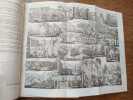
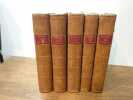
Histoire générale et impartiale des erreurs, des fautes et des crimes commis pendant la Révolution française. 6 volumes. - Dictionnaire des Individus envoyés à la mort judiciairement, révolutionnairement et contre-révolutionnairement pendant la Révolution, particulièrement sous le règne de la Convention Nationale avec des gravures et des tableaux. Deux tomes. - Histoire générale et impartiale des erreurs, des fautes et des crimes commis pendant la révolution française, à dater du 24 août 1787. Assemblée constituante. Un tome. - Histoire générale et impartiale des erreurs, des fautes et des crimes commis pendant la révolution française, à dater du 24 août 1787. Assemblée législative. Un tome. - Histoire générale et impartiale des erreurs, des fautes et des crimes commis pendant la révolution française, à dater du 24 août 1787. Convention nationale. Deux tomes.
A Paris, rue des Marais, 1796-1797. 20,5 x 13 cm, 20-lxxviij-496 pp., 516 pp., viij-348 pp., vij-256 pp., vj-517 pp. et viij-568 pp. Six tomes en cinq volumes reliés demi-veau, dos lisses, pièces de titre de cuir rouge, tranches jaunes. reliures légèrement usées sinon bon exemplaires. Dans nos exemplaires se trouvent :- Au tome I, une planche placée en frontispice et une planche dépliante.- Au tome II, une planche dépliante et in fine 5 planches dépliantes gravées (tableau des factions, des conspirations, des individus condamnés...)- Au tome III, une planche dépliante.- Au tome IV, Un tableau dépliant général des individus massacrés à Paris, Versailles...- Au tome V, une planche. - Au tome VI, une planche dépliante, deux planches et in fine un tableau dépliant des désastres de la révolution française. OUVRAGE COMPLET DE TOUTES LES PLANCHES. Les éléments des six volumes ont été compilés par l'ancien bibliothécaire et journaliste Louis-Marie Prudhomme (1752-1830). L'ouvrage aurait été saisie par la police du Directoire, ce qui le rendrait particulièrement rare. Seuls trois exemplaires disponibles dans les bibliothèques publiques françaises, dont un exemplaire incomplet.
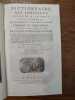

Code des comites de surveillance et revolutionnaire (+) Premier supplément au code des comités de surveillance et révolutionnaires. - [LEGAL CODE FOR THE REIGN OF TERROR DURING THE FRENCH REVOLUTION]
Paris, Impremerie du depot des lois, An II (1793). 4to. In contemporary half calf with gilt lettering and ornamentation to spine. Wear to extremities. Upper part of back hinge split, with minor loss of letters. Small dampstain to upper inner margin, otherwise a nice copy. (2), VII, (2)-116, 100, 8 pp.
Exceedingly rare first edition of this highly interesting document being the Code of the Committees of Surveillance containing 106 regulations and guidelines for the functioning of these committees during the French Revolution. The Committees of Surveillance were established during the Reign of Terror (September 5, 1793 - July 27, 1794), as part of the revolutionary government's efforts to identify and suppress counter-revolutionary activities. These committees were tasked with monitoring individuals' behavior, enforcing revolutionary laws and ensuring loyalty to the revolutionary government. The document outlines the powers, duties, and procedures of these committees, as well as the penalties for those found to be opposing the revolution, providing a unique and fascinating insight into the legal and administrative framework of revolutionary France – arguable one of the most profound and radical moments in modern European history. The Committee of Surveillance in France during 1793 was established as a part of the radical phase of the French Revolution. Its function was to oversee and monitor the activities of suspected counter-revolutionaries and enemies of the Revolution, as well as to enforce laws related to internal security and revolutionary principles. The committee was tasked with identifying individuals or groups deemed to be a threat to the revolutionary government, often leading to arrests, interrogations, and, in some cases, executions by the Revolutionary Tribunal. It played a significant role in the Reign of Terror, a period marked by extreme political violence and repression in France. The present work is of the utmost scarcity. We have not been able to trace a single copy at auction, and OCLC only lists one copy (in Paris). Nadaillac, Catalogue d’une Collection Importante Sur la Revolution Francaise 724
Der 18the Brumaire des Louis Napoleon [in: Die Revolution, eine Zeitschrift in zwanglosen Heften. Herausgegeben von J. Weydemeyer. Erstes Heft]. - [THE MOST IMPORTANT PROPOSITIONS IN THE MARXIST TEACHING ON THE STATE]
New-York, 1852. Bound in a later (ab. 1900) red full cloth binding with silver lettering to front board. A bit of wear to capitals, corners, and extremities. Front free end-paper with small repairs and strengthening. A couple of closed tears to blank outer margin of title-page (no loss and not affecting printing)Inner blank margins of the first few leaves strengthened (far from affecting text). Occasionally a few marginal notes. and underlinings. A near contemporary notice in Russian about the work has been inserted between the title-page and the preface. All in all a good copy with no major flaws. IV, (4), 62 pp.
The exceedingly scarce first edition of one of the absolutely most important writings by Marx - his seminal essay on the French coup of 1851, which not only constitutes our principal source for the understanding of Marx' theory of the Capitalist state (together with ""The Civil War in France""), but which is also the work in which Marx formulates for the first time his view of the role of the individual in history.""This work (i.e. ""The Eighteenth Brumaire""), written on the basis of a concrete analysis of the revolutionary events in France from 1848 to 1851, is one of the most important Marxist writings. In it Marx gives a further elaboration of all the basic tenets of historical materialism - the theory of the class struggle and proletarian revolution, the state and the dictatorship of the proletariat. Of extremely great importance is the conclusion which Marx arrived at on the question of the attitude of the proletariat to the bourgeois state. He says, - ""All revolutions perfected this machine instead of smashing it."". Lenin described it as one of the most important propositions in the Marxist teaching on the state. In The Eighteenth Brumaire of Louis Bonaparte Marx continued his analysis of the question of the peasantry, as a potential ally of the working class in the imminent revolution, outlined the role of the political parties in the life of society and exposed for what they were the essential features of Bonapartism."" (note 1 in the Preface to the Third German Edition (Engels, 1885) ).""The Eighteenth Brumaire of Louis Napoleon"" was written between December 1851 and March 1852 and originally published - as it is here - in 1852 in ""Die Revolution"", a German monthly magazine established by Joseph Weydemeyer and published in New York. In this cornerstone of modern political thought, Marx discusses the French coup of 1851 in which Louis-Napoléon Bonaparte assumed dictatorial powers and does so by treating actual historical events from the viewpoint of his materialist conception of history.Marx states that his purpose with the work is to ""demonstrate how the class struggle in France created circumstances and relationships that made it possible for a grotesque mediocrity to play a hero's part"" (preface to the second edition, 1869), and he famously formulates his view of the role of the individual in history (""Men make their own history, but they do not make it as they please"" they do not make it under self-selected circumstances, but under circumstances existing already, given and transmitted from the past"").If one wants to understand Marx' views on the capitalist state, ""The 18th Brumaire"" is absolutely essential, as it is to the understanding of the nature, the rise, and the meaning of fascism. Among Marxist scholars, there's wide consensus about regarding Louis Bonaparte's coup and rise to power as a forerunner of the fascism that is to emerge the 20th century. In the words of Engels: ""The fact that a new edition of ""The Eighteenth Brumaire"" has become necessary, thirty-three years after its first appearance, proves that even today this little book has lost none of its value. It was in truth a work of genius. Immediately after the event that struck the whole political world like a thunderbolt from the blue, that was condemned by some with loud cries of moral indignation and accepted by others as salvation from the revolution and as punishment for its errors, but was only wondered at by all and understood by none-immediately after this event Marx came out with a concise, epigrammatic exposition that laid bare the whole course of French history since the February days in its inner interconnection, reduced the miracle of December 2 to a natural, necessary result of this interconnection and in so doing did not even need to treat the hero of the coup d'état otherwise than with the contempt he so well deserved. And the picture was drawn with such a master hand that every fresh disclosure since made has only provided fresh proofs of how faithfully it reflected reality. This eminent understanding of the living history of the day, this clear-sighted appreciation of events at the moment of happening, is indeed without parallel. ...In addition, however, there was still another circumstance. It was precisely Marx who had first discovered the great law of motion of history, the law according to which all historical struggles, whether they proceed in the political, religious, philosophical or some other ideological domain, are in fact only the more or less clear expression of struggles of social classes, and that the existence and thereby the collisions, too, between these classes are in turn conditioned by the degree of development of their economic position, by the mode of their production and of their exchange determined by it. This law, which has the same significance for history as the law of the transformation of energy has for natural science - this law gave him here, too, the key to an understanding of the history of the Second French Republic. He put his law to the test on these historical events, and even after thirty-three years we must still say that it has stood the test brilliantly."" (Preface to the Third German Edition (Engels, 1885)).The work is incredibly scarce. OCLC lists no more than two copies in libraries world-wide: One in the USA: University of Wisconsin, one in France: Bibliothèque Nationale. We have not been able to locate a single copy at auction over the last 60 years.
Geschichte der Revolution von Nord-Amerika. - [FIRST GERMAN WORK ON THE AMERICAN REVOLUTION]
(No place), Speyer, 1785. 8vo. In contemporary (original?) marbled paper covered boards. Paper title-label to spine. Light wear to extremities and previous owner's name to title-page, otherwise a nice and clean copy. VIII, 196, (2) pp. + coloured folded map. Sabin calls for 272 pp. This present copy appears to be complete and corresponds to OCLC Accession No: 5814488 & 833586056.
![Geschichte der Revolution von Nord-Amerika. - [FIRST GERMAN WORK ON THE AMERICAN REVOLUTION]. SPRENGEL, MATTHIAS CHRISTIAN.](https://static.livre-rare-book.com/pictures/LLX/60935_1_thumb.jpg)
![Geschichte der Revolution von Nord-Amerika. - [FIRST GERMAN WORK ON THE AMERICAN REVOLUTION]. SPRENGEL, MATTHIAS CHRISTIAN.](https://static.livre-rare-book.com/pictures/LLX/60935_2_thumb.jpg)
![Geschichte der Revolution von Nord-Amerika. - [FIRST GERMAN WORK ON THE AMERICAN REVOLUTION]. SPRENGEL, MATTHIAS CHRISTIAN.](https://static.livre-rare-book.com/pictures/LLX/60935_3_thumb.jpg)
Second edition, possibly a variant - not recorded by any of the major bibliographies - of the first German work on the American revolution. Sprengel was interested in the American Revolution and also made a translation of the Declaration of Independence. (Sabin 89758)
Rewolucja i Kontrrewolucja w Niemczech. (Polish i.e. ""Revolution and Counter-Revolution in Germany""). [Bound with:] Nauki Ekonomiczne (+) Ustroj Socjalistyczny. - [FIRST POLISH TRANSLATION OF MARX'S ""REVOLUTION AND COUNTER-REVOLUTION""]
Warszawa, Bibljoteka Naukowa, 1906. Small4to. Bound in contemporary half calf with gilt lettering to spine with four raised bands. Stamp to title-pages and last leaf, otherwise fine. 277, (3), 154, (6), 51, (1) pp.
First Polish translation of Marx and Engel's articles on the events in the Prussia, Austria and other German states during 1848, describing the impact on both middle-class and working-class aspirations and on the idea of German unification. It was originally published as a series of articles in the New York Daily Tribune 1851 to 1852 under Marx's byline, the material was first published in book form under the editorship of Eleanor Marx Aveling in 1896.
Geschichte der Amerikanischen Revolution aus den Acten des Congresses der vereinigten Staaten. 4 vols.
Berlin, Vossischen Buchhandlung, 1794 - 1795. 8vo. Uniformly bound in four contemporary (original?) blue cardbord-bindings with author and tome-label in contemporary hand. Small paper-labels pasted on to top of spine. Spines with wear and miscoloured. Internally nice and clean. XVI, 446 pp. IV, 444 pp. (8), 391 pp. (10), 404 pp.
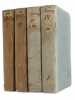
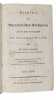
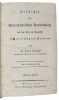
First German edition of Ramsay's landmark work on the American Revolution. David Ramsay is considered to be one of the first major historians of the American Revolution. Sabin 67688.
Mémoire Sur la Combustion du Fer. (Etc. etc. etc.). - [THE LAVOISIERIAN REVOLUTION IN CHEMISTRY]
Paris, Rue et Hotel Serpente, 1789. 8vo. Contemporary half calf. Gilt spine, slightly rubbed, light wear to spine ends. ""Annales de Chimie: ou Recueil de Mémoires Concernant la Chimie et les Arts qui en Dépendent. Par MM. de Morveau, Lavoisier, Monge, Berthollet, De Fourcroy, le Baron de Dietrich, Hassenfratz & Adet."" Tome Premier. (2),312,(2) pp. The entire volume offered. Some scattered brownspots. A small wormtract to upper margin of ab. 20 leaves, no loss of letters.
![Mémoire Sur la Combustion du Fer. (Etc. etc. etc.). - [THE LAVOISIERIAN REVOLUTION IN CHEMISTRY]. "LAVOISIER, ANTOINE-LAURENT, ET AL.](https://static.livre-rare-book.com/pictures/LLX/43634_1_thumb.jpg)
![Mémoire Sur la Combustion du Fer. (Etc. etc. etc.). - [THE LAVOISIERIAN REVOLUTION IN CHEMISTRY]. "LAVOISIER, ANTOINE-LAURENT, ET AL.](https://static.livre-rare-book.com/pictures/LLX/43634_2_thumb.jpg)
![Mémoire Sur la Combustion du Fer. (Etc. etc. etc.). - [THE LAVOISIERIAN REVOLUTION IN CHEMISTRY]. "LAVOISIER, ANTOINE-LAURENT, ET AL.](https://static.livre-rare-book.com/pictures/LLX/43634_3_thumb.jpg)
First edition of the first volume of this very important journal, founded by Lavoisier and his friends, collaborating in establishing THE NEW SCIENCE of Anti-Phlogistic theory in chemistry. Crosland (in ""The two French Revolutions"" and ""The Imperial Despotism of Oxygen"") claims that for a clear understanding of the CHEMICAL REVOLUTION, THE NEW JOURNAL of ANNALES DE CHIMIE can be rightly considered as FUNDAMENTAL as the ""Traite élementaire de Chimie"".""A third and most important instrument was the establishment of a new scientific journal, edited - and dominated - by the votaries of the ""new chemistry"". The first number of this journal of the Annales de chimie appeared in 1789, the year of the Revolution. Its editors were besides Lavoisier, his early disciples - Guyton, Berthollet, Fourcroy, and Monge - with the addition of three new recruits: the Strassbourf metallurgist the Baron de Dietrich, Jean-henri Hssenfratz and Pierre Auguste Adet.""(DSB VIII, p.81).LAVOISIER'S paper on COMBUSTION (pp. 19-30) contains his important interpretation of the phenomena of combustion in air, making the fundamental distinction between burning and combustion. By this ""Lavoisier gave to the study of chemistry a new life, a new direction and a wider outlook."" (Alexander Findley).""The Lavoisierian memoir on combustion of iron stood out among the large number of interesting papers discussed in the first volume of the ""Annales"". In his account Lavoisier sustained that in nature, combustion without flames did occur. Thus, he clarified the distinction between ordinary burning and combustion: an issue on which the majority of traditional chemists were confused. The need for accuracy and precision in laboratory practices was emphasised in his study, as it was a means to determine quantities rather than assuming them.""(Angela Bandinelli in ""Scientific Communication During a Major Change ...Empirical Research: Annales de chimie vs Obs. sur la physique/ Journal de physique (1789-1803)).The volume furthermore contains important papers by: Adet, Fourcroy (3 papers), Berthollet (3 papers), Chaptal, Hassenfratz (5 papers), Baron de Dietrich (2 papers), Klaproth (2 papers), Girtanner, Dollfuss, Bonz de Ettingen, Crell, De Morveau.
Mémoires tirés des papiers d'un homme d'Etat sur les causes secrètes qui ont determiné la politique des cabinets dans la guerre de la révolution depuis 1792 jusqu'en 1815 - Tome I à IV -
Paris: Ponthieu, 1828-1838 - 4 volumes in-8 demi-basane, dos à nerfs avec filets et fleurons dorés, pièces de titre et de tomaison, 516, 581, 494 et 594 pages - Edition originale - bon état (sinon deux menus accidents au dos des tomes I et III) -
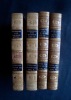
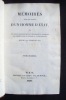
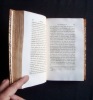
Tome I et II : depuis 1792 jusqu'en 1815 - Tome III et IV : depuis 1796 jusqu'en 1797. Complet en 13 volumes. La révolution occupe les 7 premiers volumes.Alphonse de Beauchamp commence la rédaction des trois premiers volumes. Armand d’Allonville (1762-1832), officier royaliste français rédige les derniers volumes. Tous nos livres sont visibles sur notre site : https://www.livrepoesie.com/
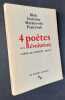
BLOK (Alexandre) - ESSENINE (Serge) - MAIAKOVSKI (Wladimir) - PASTERNAK (Boris) -
Reference : 44565
4 poètes de la révolution -
Traduits par Gabriel Arout - Paris : Editions de Minuit, 1967 - un volume broché (13,2x18,2cm)sous couverture à rabats, 136 pages - Edition originale de la traduction sur papier courant avec un envoi autographe signé du traducteur Gabriel Arout. Petites rousseurs en quatrième de couverture sinon bon état -
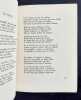
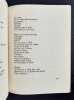
Tous nos livres sont visibles sur notre site : https://www.livrepoesie.com/
GUILLEN (Nicolas). VITIER (Cintio). FERNANDEZ RETAMAR (R.). DIEGO (Eliseo). GUEVARA (E.). DEPESTRE (René). SUAREZ (Adolfo). PELEGRIN (Benito).
Reference : 46564
Sud. Revue trimestrielle, n°22/23, 2ème trimestre 1978 : Révolution poétique et poésie révolutionnaire : Cuba à travers les poètes de la révolution (1956-1977)
Marseille, directeur : Yves Broussard. 1 volume 14,5x22cm, 277 pages. Edition bilingue de cet excellent numéro sur la poésie à Cuba. Introduction, sélection, traduction et notes de Benito Pelegrin. Bon état.
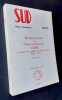
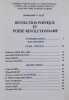
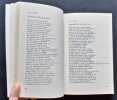
Fondée en 1970 par Jean Malrieu (1915-1976), la revue Sud comptera 117 numéros jusqu'en 1996. Tous nos livres sont visibles sur notre site : https://www.livrepoesie.com/
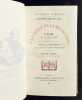
Lyon à la veille de la révolution de 1778 à 1788 :
Notes et documents publiés par Albert Metzger et révisés par Joseph Vaesen. Lyon : Librairie Générale Henri Georg (Collection "Bibliothèque lyonnaise"), achevé d'imprimer le 15 octobre 1888. In-12 demi-chagrin, dos à nerfs avec titre, filets et écussons dorés, 161 pages. Edition tirée à 300 exemplaires sur papier vergé de Hollande. Papier marbré de la première de couverture très légèrement frotté sur 1x1 cm sinon reliure et exemplaire très bien conservés.

Tous nos livres sont visibles sur notre site : https://www.livrepoesie.com/
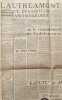
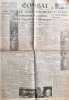
Combat, "de la résistance à la révolution" n°654, du vendredi 12 juillet 1946.
Journal 42x59,8cm. quotidien de 4 pages illustrées. Pliures avec deux fentes sans gravité. Textes de Julien Gracq publié en préface du Lautréamont aux Editions la Jeune Parque : "Lautréamont, ce dynamiteur archangélique ou le ressentiment de l'adolescence." Maurice Nadeau : Kaputt, de Curzio Malaparte.
Tous nos livres sont visibles sur notre site : https://www.livrepoesie.com/
Precis de la conduite de Madame de Genlis depuis la revolution. Suivi d'une lettre a Mr. De Chartres & de reflexions sur la critique.
Hambourg, Hoffmann, 1796. 8vo. In contemporary marbled paper covered boards with gilt lettering to spine. Small paper-label pasted on to top of spine. Light wear to spine, a nice and clean copy. IV, 5-296 pp.
Uncommon first edition of Stéphanie Félicité, comtesse de Genlis’ographical work where she defends her actions and choices during and after the French Revolution. Here Madame de Genlis addresses public criticisms of her life and decisions, particularly in her roles as a writer, educator and political figure associated with the royal family.
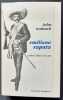
Emiliano Zapata et la révolution mexicaine -
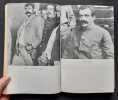
Traduit de l'américain par Frédéric Illouz - Paris : François Maspero (Cahiers libres), 1976 - un fort volume 13,5x21,8cm de 547 pages illustrées d'un cahier de planches photographiques sur papier couché - bon état - édition originale de la traduction française -
Tous nos livres sont visibles sur notre site : https://www.livrepoesie.com/
Reference : 5083
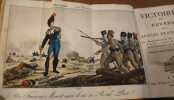
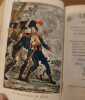
Victoires et revers des armées françaises ou Abrégé historique des Campagnes des Français, depuis le commencement de la Révolution française jusqu'en 1815. Relié avec : Les Armées françaises depuis le commencement de la révolution jusqu'à la fin du règne de Bonaparte, ou Recueil de traits de bravoure... Suivi d'une table chronologique de toutes les batailles livrées par les armées françaises depuis 1792 jusqu'en 1815. Seconde édition.
Pour le premier ouvrage : Paris, L'Ecrivain, 1817. 13,5 x 8,5 cm, un frontispice gravé dépliant coloré, xij-276 pp. Bon état. Pour le deuxième ouvrage : Paris, Ledentu, 1815. 13,5 x 18,5 cm, un frontispice gravé coloré xij-238 pp. Page 191 déchiré et manquent les pages 192 à 196. Les deux ouvrages reliés demi veau, dos lisse,deux pièces de titre oranges. Reliure légèrement usée sinon bon état.
La révolution introuvable - Réflexions sur les évènements de mai -
Paris : Fayard (Collection En toute liberté), 1968. Un volume broché (15x21,6 cm), 187 pages. Edition originale. Bon état.
Tous nos livres sont visibles sur notre site : https://www.livrepoesie.com/
Révolution dans la révolution ? Lutte armée et lutte politique en amérique latine.
Paris : François Maspero (Collection Cahiers Libres n°98), 1967. Un volume broché (11,5x20 cm), 138 pages. Bon état.
Tous nos livres sont visibles sur notre site : https://www.livrepoesie.com/
Citoyennes - Les femmes et la révolution française -
Préface de Claude Mazauric - Postface d'Elisabeth Guibert-Sledziewski - Paris : Messidor (1789-1989), 1989 - in-8 cartonné sous couverture illustrée en couleurs, 254 pages illustrées en noir dans le texte - bon état -
Tous nos livres sont visibles sur notre site : https://www.livrepoesie.com/
Souvenirs de la Révolution. Madame Roland. Sa détention à l'Abbaye et à Sainte-Pélagie, 1793, racontée par elle-même dans ses mémoires.
Paris : Georges Hurtrel, Artiste-Editeur, 1886 – in-12 (16,4x12cm) plein maroquin rouge, dos à nerfs, premier plat gravé à froid (grilles d'un cachot avec le mot mémoires en lettres dorées), titre et auteur dorés, tranche supérieure dorée, 239 pages avec un portrait-frontispice à l'eau-forte gravé par A. Poirson, 5 planches hors texte et de très nombreuses gravures dans le texte - (Vicaire VI, 1175-1176). Belle reliure d'art (XXème siècle).
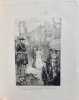
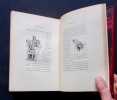
Très jolie édition donnant les principaux extraits des Mémoires de l'égérie des Girondins, rédigés pendant ses cinq mois de détention à l'Abbaye et à Sainte-Pélagie. Tous nos livres sont visibles sur notre site : https://www.livrepoesie.com/
Histoire véridique et vécue de la Révolution de 1848 depuis le 24 février jusqu'au 10 décembre sur des notes prises au jour le jour -
Paris : Dentu, 1887 - in-8 broché sous couverture imprimée en deux tons et rempliée, 196 pages - édition originale - manque de 0,5 cm au dos sinon bon état -
Tous nos livres sont visibles sur notre site : https://www.livrepoesie.com/
Tableau Historique de la Guerre de la Révolution de France, depuis son Commencement en 1792, jusqu'a la Fin de 1794 Précédé d'une Introduction Génèrale contenant l'Exposé des moyens défensifs et offensifs sur les frontières du Royaume en 1792, ...
4to. 3 cont. hcalf with gilt backs. Tear at top of spine on one volume. Library numbers in lower compartments. Stamps on titles. (4),XXIX,403-(4),XX,404-IV,111,64,18,(2) pp. and 19 large folded engraved maps (postions handcoloured).
First edition. Volume I-II by Grimoard, vol. III by Servan. Grimoard was the main military adviser to Louis XVI and he was head of the defense during the Revolution.
The History of England, from the Invasion of Julius Cæsar to the Revolution in 1688. A New Edition. 10 Vols. (+) The History of England, from the revolution in 1688, to the Death of George II. Designed as a Continuation of Hume. By T. Smollett. 6 Vols...
Edinburgh, W. Laing et al., 1818. Bound in 16 uniform contemp. hcalf. Richly gilt spines. Titlelabels with gilt lettering. A few joints starting. Light wear along edges and some spine-ends. Spines slightly rubbed. Some offsetting to title-pages. Engraved portrait as frontispiece (Hume) and engraved portrait (Smollett). Internally fine.
Relation véritable et remarquable du grand voyage du Pape en paradis et en enfer suivie de la translation du clergé aux enfers par le Cardinal de Montmorency ou la RÉVOLUTION INFERNALE;
Réimpression XIXème sans lieu, ni date de cette plaquette imprimée à l'origine chez Fiévée, rue Serpente, A Paris en 1791. Une plaquette brochée (9,5 x 15 cm) de 27 pages, couverture imprimée. Couverture légèrement salie sinon ouvrage en bon état.Ce pamphlet révolutionnaire a été attribué à l'imprimeur Joseph Fiévée lui-même (Brunet vol. , page 56).
Joseph Fiévée, né le 9 avril 1767 à Paris et mort le 9 mai 1839 à Paris, est un journaliste, écrivain, haut fonctionnaire et agent secret français. Il est imprimeur sous la Révolution, éditant notamment La Chronique de Paris, important journal de l'époque où il fait ses débuts comme journaliste. Cela lui vaudra d'être emprisonné sous la Terreur. Membre du réseau royaliste de l'abbé de Montesquiou, il doit se cacher sous le Directoire. Il rédige dans la clandestinité un roman sur les valeurs de l'époque et ses remous, La Dot de Suzette, qui rencontre un grand succès littéraire en 1798. Il s'adonne ensuite à la politique et se jette en 1795 dans une opposition périlleuse. De 1800 à 1803, il est chroniqueur à la Gazette de France. Écroué au Temple sur ordre de Fouché et libéré sur intervention de Roederer à la demande de Bonaparte, il devient l'agent secret de ce dernier, l'informant sur la situation politique du pays et sur celle de l'Angleterre...
Doctor Zhivago. Translated from the Russian by Max Hayward and Manya Harari. - [A TRAGEDY OF THE REVOLUTION]
London, Collins and Harvill Press, 1958. Orig. full red cloth w. gilt lettering to back in an excellent, not price-clipped orig. red, blue and yellow dust-jacket w. only very minor nicks and creases to extremities. An excellent, nice and clean copy.
First English edition, first printing of this modern classic, which tells the tragic story of the medical doctor and poet, Yuri Zhivago, in the years during the Russian Revolution.Though begun several decades earlier, the work was completed in 1956, and was submitted for publication to the journal ""Novij Mir"" the same year, but due to the controversial contents of the work and the Soviet government's dislike of Pasternak, it was rejected. The following year the manuscript was smuggled out of the Soviet Union by the Italian publisher Feltrinelli, who published the book in Russian in Milan in 1957. Already the following year numerous European translations of the work had been made, and the English and Italian ones appeared as the first. These immediate translations and the publications of them partly caused Pasternak being awarded the Nobel Prize for literature in 1958. Due to the immense popularity of the work, all the European translations were reprinted numerous times.In 1965 the work was made into the large-scale film-production by David Lean, which was nominated for ten Oscars and won five.
Dokto Schiwago. Roman. (Deutsch von Reinhold Walter). - [A LIFE DESTROYED BY REVOLUTION]
(Frankfurt a. M.), S. Fischer Verlag, 1958. Orig. black full cloth w. red lettering to back and front board in excellent orig. red dust-jacket. An excellent, clean, near mint copy.
First German edition of this modern classic, which tells the tragic story of the medical doctor and poet, Yuri Zhivago, in the years during the Russian Revolution.Though begun several decades earlier, the work was completed in 1956, and was submitted for publication to the journal ""Novij Mir"" the same year, but due to the controversial contents of the work and the Soviet government's dislike of Pasternak, it was rejected. The following year the manuscript was smuggled out of the Soviet Union by the Italian publisher Feltrinelli, who published the book in Russian in Milan in 1957. Already the following year numerous European translations of the work had been made, and the English and Italian ones appeared as the first. These immediate translations and the publications of them partly caused Pasternak being awarded the Nobel Prize for literature in 1958. Due to the immense popularity of the work, alle the European translations were reprinted numerous times.In 1965 the work was made into the large-scale film-production by David Lean, which was nominated for ten Oscars and won five.

